
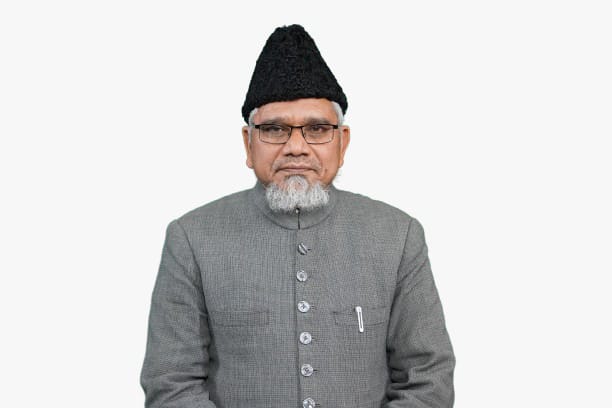
JIH Vice President, Prof Salim Engineer Calls for Long-Term Strategy to Tackle India’s Air Pollution Crisis
New Delhi: The Vice President of Jamaat-e-Islami Hind (JIH), Prof. Salim Engineer, has expressed deep concern over the worsening air pollution crisis gripping the National Capital Region (NCR) and several major cities across the country.
In a statement to the media, Prof. Salim Engineer said, “Hazardous air quality levels have become a public health emergency. These AQI levels reflect the failure of the government to control vehicular and industrial emissions. The government also seems to lose its grip on the increasing construction dust, crop-residue burning, and waste burning despite tall claims of reducing pollution. This toxic climate continues to endanger public health, disrupt education and mobility, and steadily erode the quality of life for millions, particularly children, the elderly, and those with pre-existing illnesses. The Supreme Court has made it clear that a year-round implementation of the Graded Response Action Plan (GRAP) is impractical. What is required is a comprehensive, long-term clean-air strategy. Temporary measures such as construction bans, traffic restrictions, and periodic shutdowns will offer only short-lived relief. In fact, it will have a disproportionate impact on daily-wage earners, migrant workers, and small businesses. What India requires is a coordinated, scientific, and year-round pollution control backed by strong political will and effective inter-state cooperation.”
The JIH Vice President stated, “We urge the Central and State governments to implement the recommendations of pollution control experts who recommend that the state must clearly define targets, timelines, and accountability mechanisms. There must be strict enforcement of industrial, thermal power, and vehicular norms through real-time monitoring. The government must take the lead in ensuring sustainable and farmer-friendly solutions to eliminate stubble burning. There must be strict regulation of construction sites, dust suppression, and complete eradication of open waste burning. The other important aspect of protecting the environment is the expansion of clean, affordable public transport, rapid electrification of buses, and last-mile mobility. Along with it, there should be promotion of non-motorised transport and transparent, hyper-local air quality data systems.”
Prof. Engineer further called upon civil society organisations, resident groups, environmental activists, and youth platforms to play a proactive role in monitoring violations and holding authorities accountable. Citizens, he added, must also adopt environment-positive behaviours and support community-led green initiatives. Concluding, he said that Islam views this world and its resources, including air, climate, and the environment as an amanah (trust) bestowed by Allah. As Vicegerents of God on Earth, we are duty-bound to preserve and protect this trust for present and future generations.
Issued by:
Salman Ahmad
National Assistant Secretary, Media Dept.
Jamaat-e-Islami Hind, HQRS
Mobile: 7290010191
Address: D-321, Abul Fazl Enclave, Jamia Nagar, Okhla,
New Delhi – 110025